Terrace Wall: The Ideal Solution Against Wind and Prying Eyes
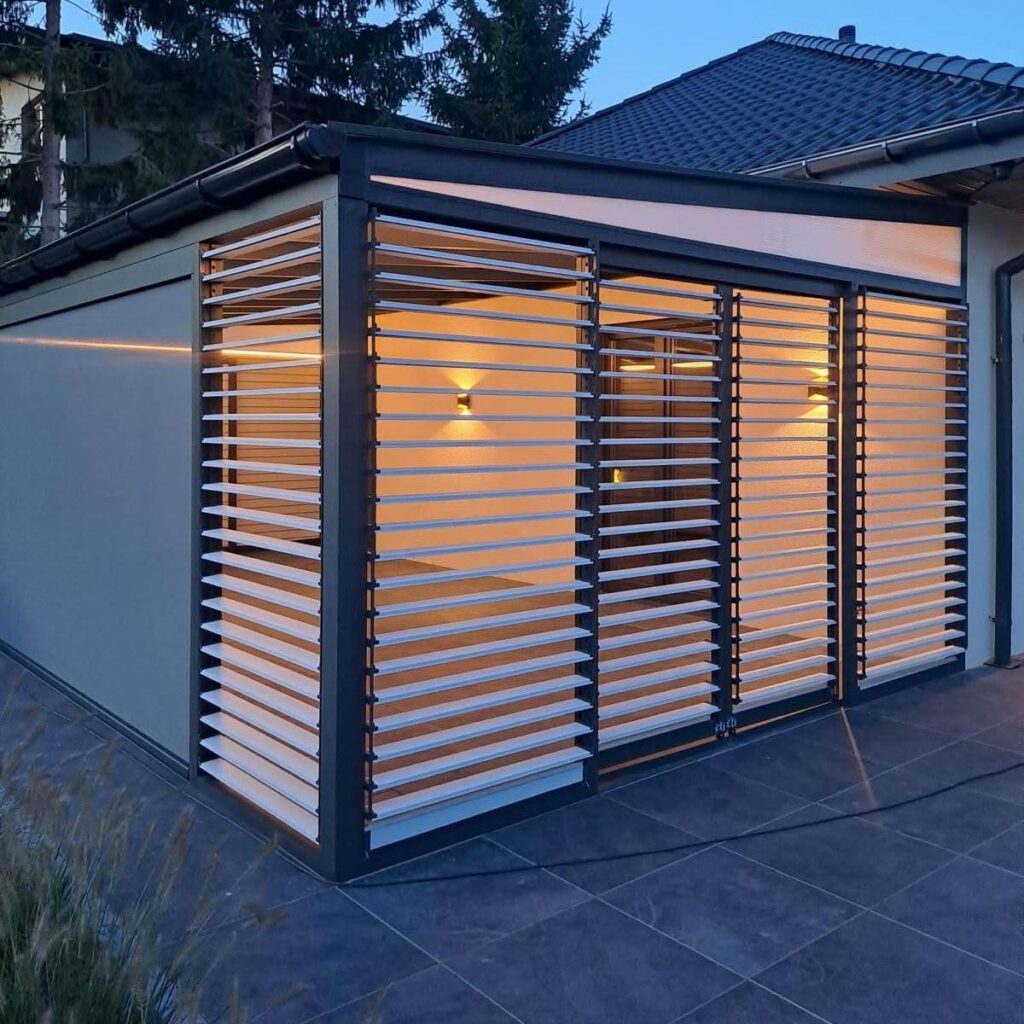
The Estonian summer is wonderful, but often unpredictable. Have you ever set the table for a party on the terrace, only to discover how a sudden gust of wind carries the napkins away and leaves your guests shivering? Or do you simply want to enjoy your morning coffee in your pajamas without wondering whether the neighbors happen to be looking your way? A properly built terrace is the heart of any garden, but without the right screening its uses are limited. This is exactly where a cleverly planned terrace wall comes to the rescue.
A terrace wall is not just a partition; it is an architectural extension of your outdoor space that provides protection, creates coziness and raises the value of the entire property. In this guide we give the homeowner a thorough overview of how to choose and build the ideal windbreak for the terrace. We will talk about different materials, from traditional wood and modern glass to innovative adjustable louver solutions. We will also share valuable tips for DIYers so that enclosing the terrace succeeds on the first try. Read on and turn your outdoor oasis into a weatherproof and private retreat!
Why is a terrace wall essential in every garden?
An open platform is beautiful, but in practical everyday life we face the forces of nature and the dynamics of the neighborhood. A well-thought-out terrace wall solves several problems at once, making the outdoor area usable from early spring to late autumn.
Protection against unpredictable Estonian weather
The most common reason for building a wall is to create a wind barrier for the terrace. A constant draft does not just make sitting outside uncomfortable, it also quickly cools both your body and your food. A well-planned windbreak for the terrace stops direct wind, creating a warmer microclimate behind the wall. If you combine the wall with infrared heaters, you can use your terrace even on cool October evenings.
A windbreak extends the terrace season
A unique insider’s view: Many homeowners make the mistake of building a completely airtight wall (for example with tightly fitted boards) facing the wind. Physically, a completely solid obstacle creates turbulence behind the wall (on the inner side of the terrace), that is, wind eddies that swirl cool air right into the seating area. The smarter approach is to build a terrace wall that lets about 10–15% of the air through (for example boarding with small gaps, or louvers in an open position). This “breaks” the force of the wind and creates a pleasant, even calm behind the wall without disruptive eddies.
Creating privacy in a densely populated area
In modern townhouses and dense new residential districts, houses often sit very close to one another. Privacy on the terrace is a luxury everyone deserves. A stylish partition shields your relaxation area from the eyes of neighbors and passers-by, giving you the freedom to feel completely at ease in your own garden. It does not cut you off from nature; instead it creates an intimate and secure “outdoor room.”
Which terrace wall should you choose? Different materials and styles
The choice of the right material determines not only how the terrace wall looks, but also how much maintenance it will need in the future. As a homeowner, you have to find a balance between aesthetics, functionality and budget.
The classic wooden wall and its charm
Wooden terrace railings and walls are timeless classics. Wood is warm, natural and blends beautifully with the architecture of most Estonian homes. You can choose horizontal boarding, which makes the space look visually wider, or vertical boarding, which adds height. The biggest drawback of wood is the need for maintenance and its static nature. A fixed wooden wall often makes the corner of the terrace too dark and limits the view even when the weather is nice and you would like to enjoy the openness.
Glass terrace walls – openness and light
If you want one hundred percent protection from wind and rain but do not want to lose the view of your beautiful garden, glass terrace walls are a tempting option.
The pros and cons of glazing
Glass brings maximum light into the space. But it comes at a price: glass needs constant cleaning, because every raindrop, fingerprint and speck of dust shows up immediately. In addition, an enclosed glass terrace often acts like a greenhouse in summer – in direct sunlight the temperature inside becomes unbearable. Glass offers wind protection, but it offers no privacy at all.
The smart, movable louver privacy screen – the best of both worlds
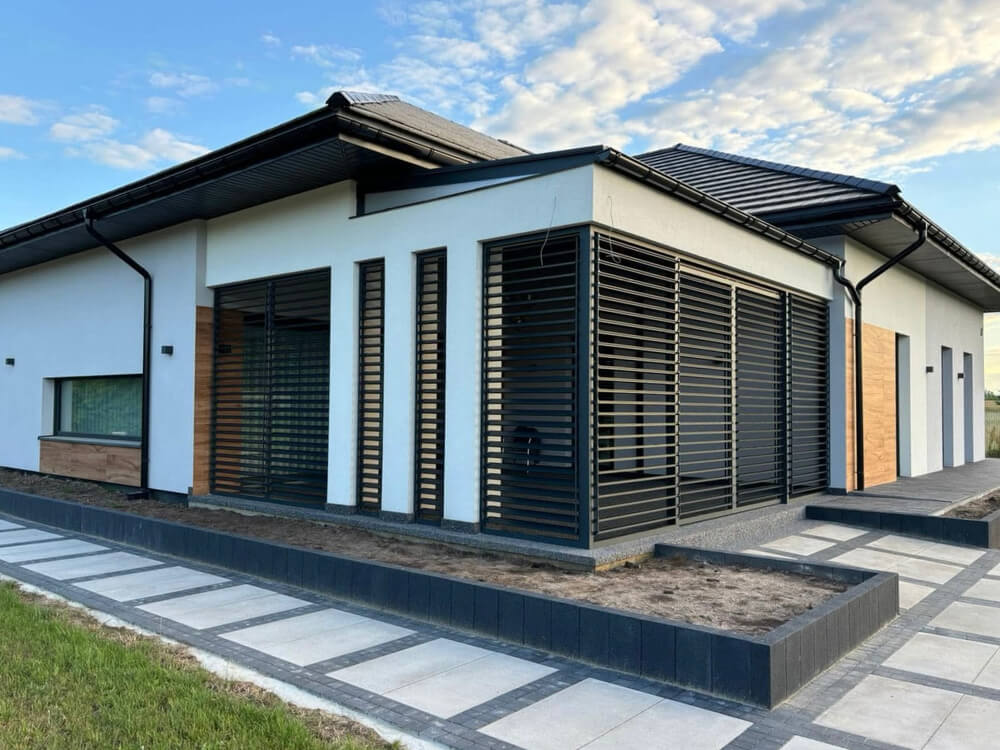
To solve both the darkening effect of wood and the greenhouse effect of glass, designers and engineers have created an innovative solution: the adjustable, opening louver privacy screen. This is a movable terrace wall that works much like indoor louvered blinds, but is built from durable materials suited to outdoor conditions. Such a terrace wall gives you complete control – in the hot sun you create shade, in strong wind you close the wall, and in nice weather you open the louvers to enjoy the view and the fresh air. This is terrace screening in its most intelligent form!
-
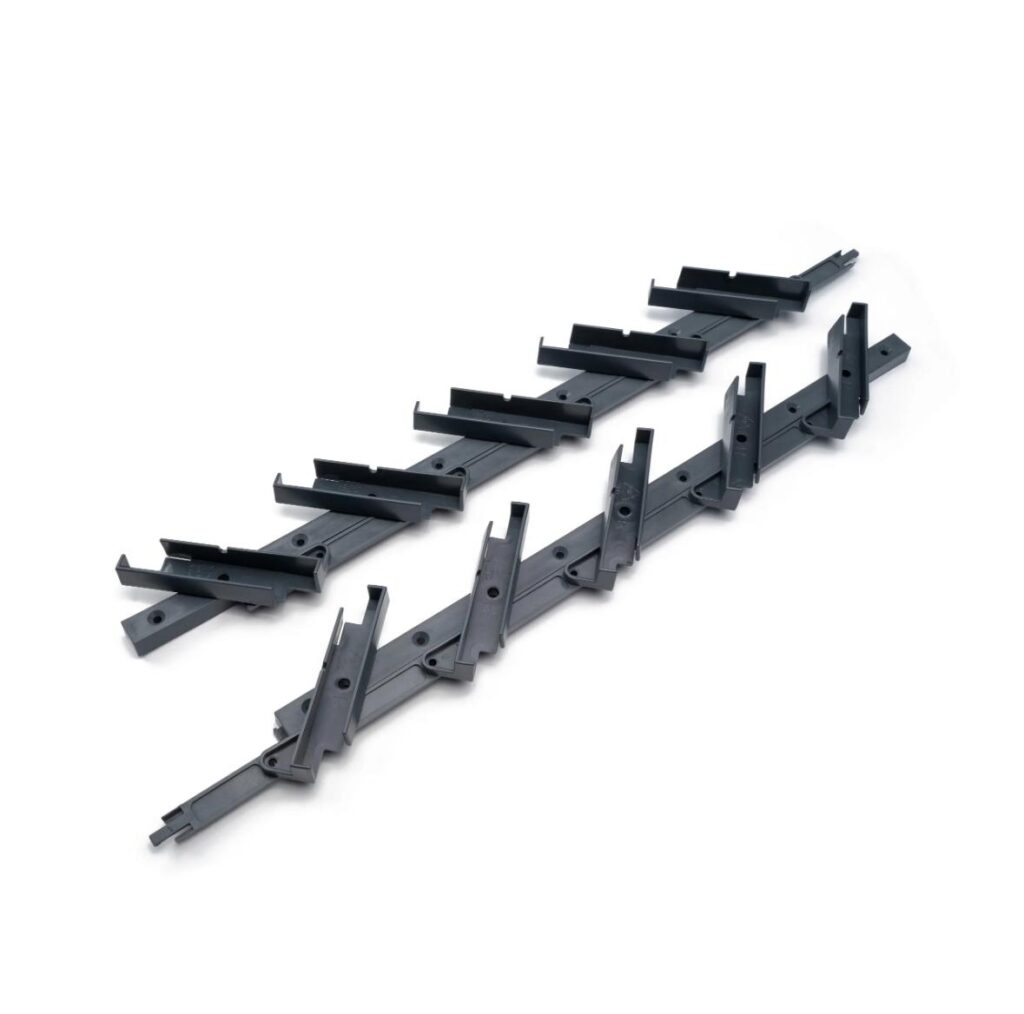
Louver Brackets Privaed Flow Core 500 mm, RAL 7016 anthracite grey composite
28.99 € -
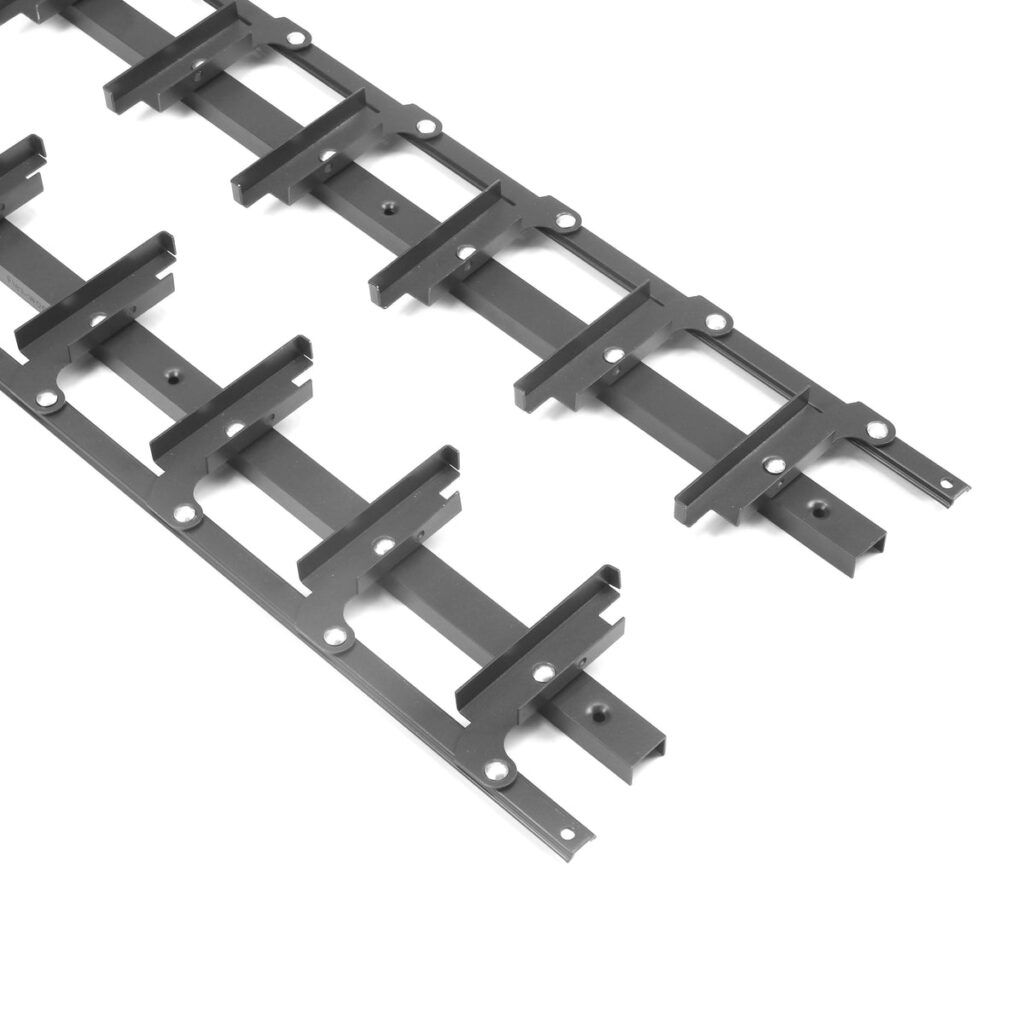
Louver Brackets Privaed FLOW 1070 mm, RAL 7016 anthracite grey aluminium
74.00 € -
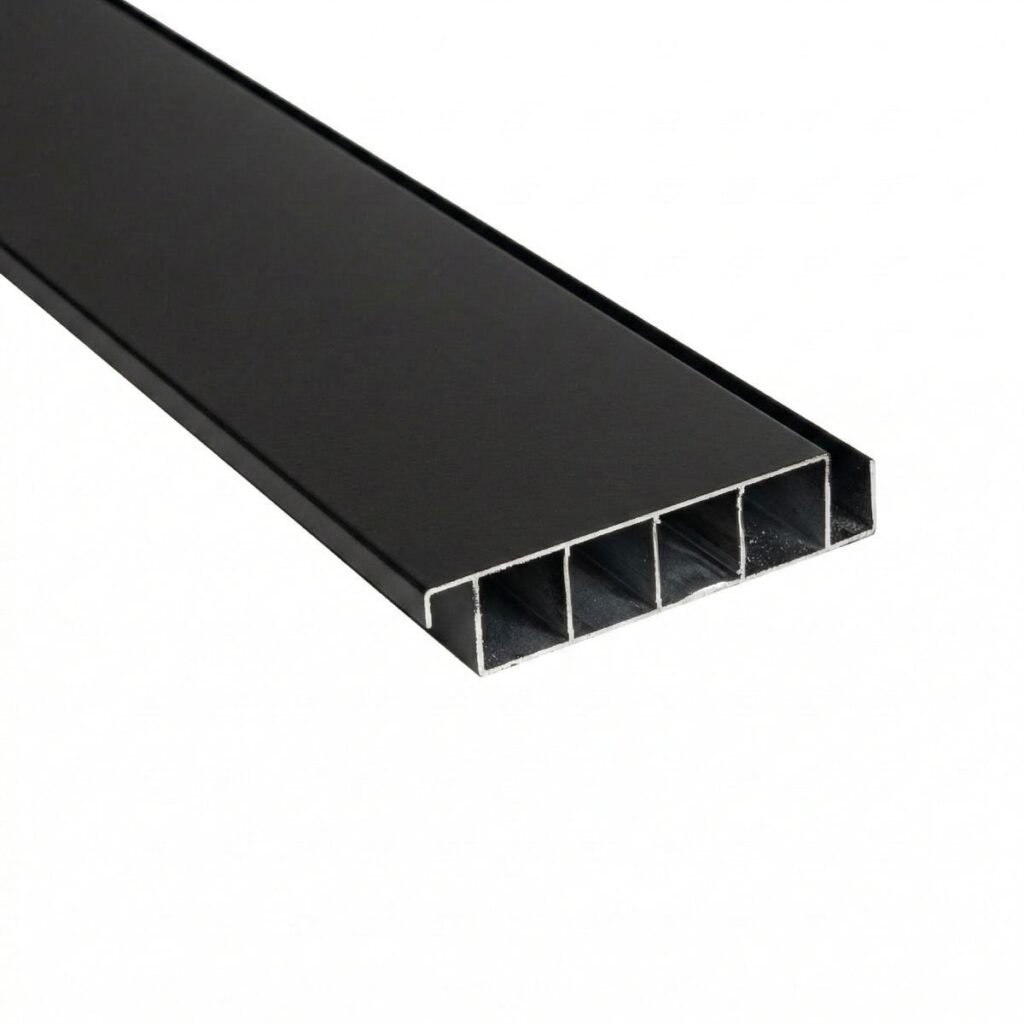
Louver Profile FLOW 2400 mm, black aluminium
Original price was: 42.90 €.36.47 €Current price is: 36.47 €. -
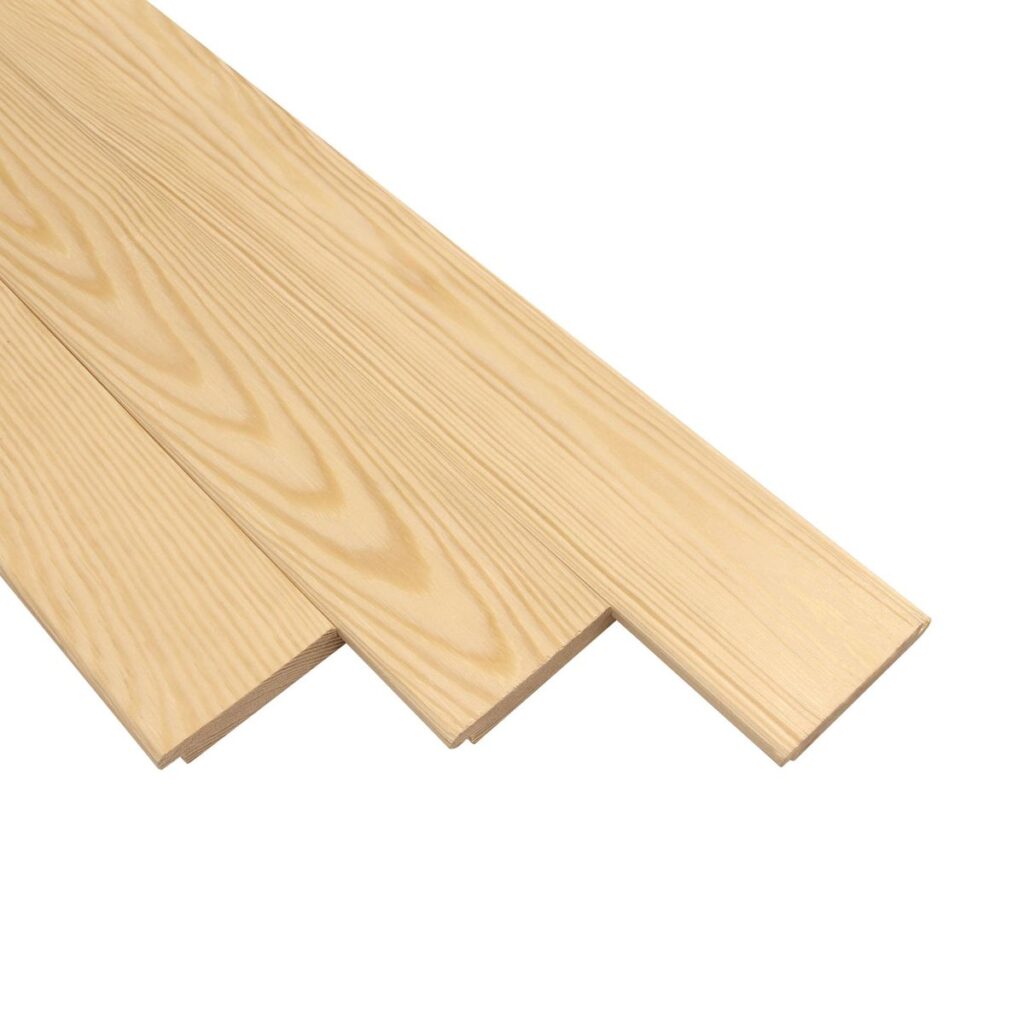
Louver Profile FLOW UYS 20x95x1200 mm, natural AB knot-free pine
5.75 € -
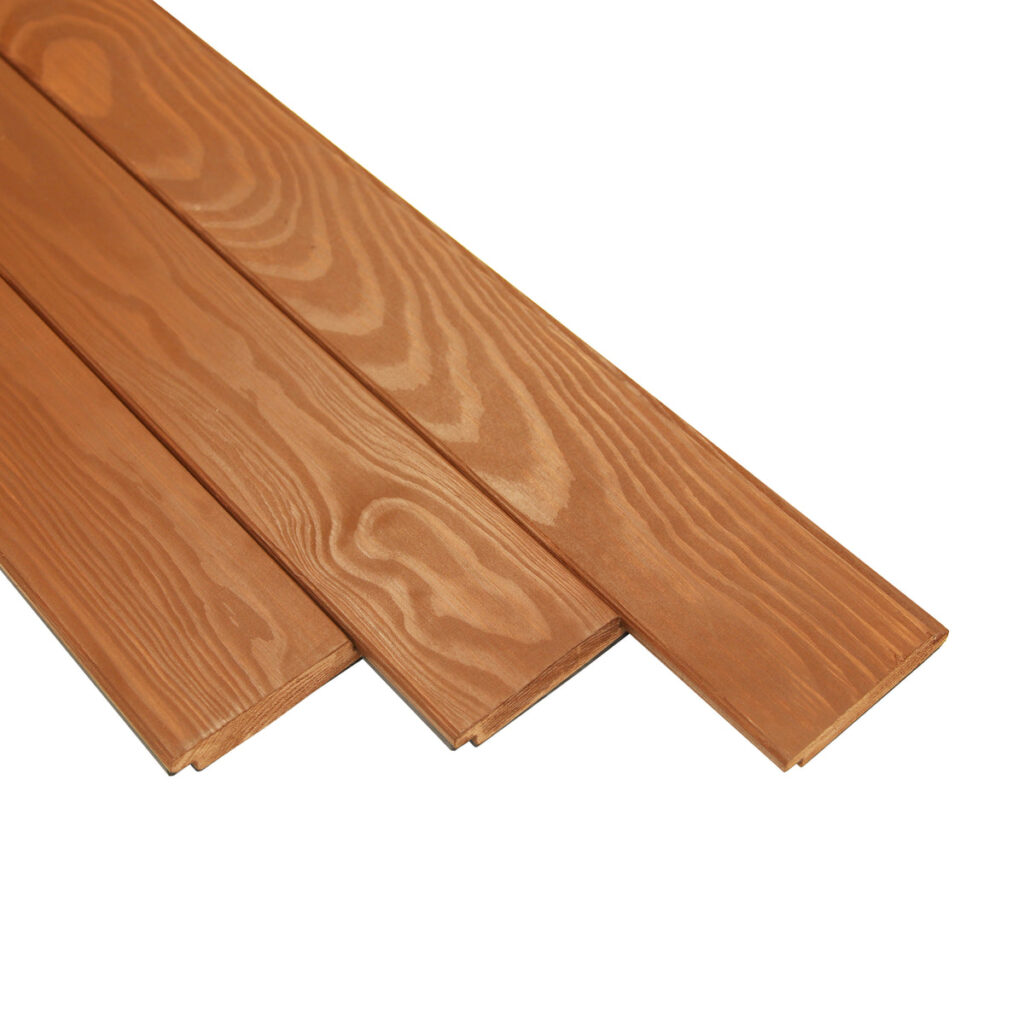
Louver Profile FLOW UYS 20x95x1400 mm, thermo pine
8.41 €
How do you build a terrace wall that is both beautiful and practical?
Building an adjustable wall does not have to be complicated or require expensive custom orders. Modern systems are designed precisely with DIYers in mind.
The advantages of the “Deck Blind” system
To turn ordinary wooden boarding into a dynamic wall, you need the right hardware. The heart of the system is the louver brackets. These are special rails that are fastened to the inner sides of the terrace’s vertical support posts. Within these rails are rotating sockets into which wooden or aluminum boards are slid. All the sockets are connected to one another by a control bar, which means a single movement of the hand is enough to make the entire terrace wall change its angle. This is a weatherproof solution that takes the comfort of using your terrace to a whole new level.
Combining the louver brackets and profiles
Finding suitable material for the brackets is easy. You need louver profiles that slide precisely into the bracket sockets.
Choosing the right material – wood vs. aluminum
Designing your terrace also requires choosing the materials that go into the brackets:
- Wooden profiles (thermowood, pine): Gives a warm and natural look. Wood is affordable and easy to work with. The downside is that wood “moves” with moisture, so when cutting the boards you must always leave enough room for expansion at the ends so the mechanism does not jam.
- Aluminum profiles: This is the premium choice! Aluminum is 100% maintenance-free, exceptionally rigid and lightweight. It does not sag or expand with moisture. In addition, aluminum louvers with a wood-imitation finish are available, offering the beauty of wood but the everlasting durability of metal.
Installing the terrace wall yourself (DIY guide)
Have you decided that your new solution will be an adjustable terrace wall? Building a terrace and installing the wall is a completely manageable project for any home handyperson.
Planning and measuring
- Erecting the support posts: Before building the wall you must make sure you have a strong frame. Fasten vertical wooden posts (e.g. 90×90 mm or 100×100 mm) firmly to the structure of your terrace.
- Calculating the spacing: The optimal distance between two posts should be 100–120 cm. With a longer span the profiles (especially wood) may start to sag in the middle.
- Leveling is critical: Make sure both posts are perfectly vertical and plumb. If the posts are tilted, the louver mechanism will start to bind.
Erecting the frame and the fixings
- Measure and cut the louver brackets to match the height of the posts. Fasten them with screws to the inner sides of the posts, making sure the sockets on both sides are at exactly the same height.
- Measure the distance between the posts and cut the louver profiles to the correct size. Note! If you are using wood, always cut them about 2–4 mm shorter than the clear gap between the posts, to leave room for moisture expansion.
Maintaining the terrace wall to ensure longevity
Even the most beautiful terrace wall needs a little care to ensure its longevity, especially when it involves moving parts and wood. Regular maintenance prevents larger repair costs in the future.
Oiling and cleaning the wooden parts
If your terrace screening consists of wooden louvers, it is recommended to treat them with a special wood oil or stain at least every 1–2 years. It is important to impregnate the wood (especially the sawn ends) before installing it in the system, because afterwards it is hard to reach in between the brackets. The moving brackets (plastic rails) must be cleaned of dust and leaves in autumn and spring (use compressed air or a soft brush). To keep the mechanism running smoothly, spray only dry silicone spray (PTFE) into the sockets. For aluminum profiles it is enough simply to wash them with lukewarm soapy water.
Quick takeaways (Key Points)
- Choose a wind diffuser, not a solid wind block: A rigid wall creates turbulence; small air gaps (as in a louver privacy screen) create genuine calm behind the wall.
- Privacy on your terms: An adjustable terrace wall gives you the option to hide from the neighbors without losing the feeling of open space.
- The right material: Glass terrace walls provide maximum light, but a louver privacy screen is more practical, since it does not allow a greenhouse effect to build up and needs less washing.
- Aluminum is maintenance-free: For smart louver systems it is worth preferring aluminum profiles, which do not expand or deform.
- DIY-friendly: Louver brackets make building the wall a simple project that requires only a level, a saw and a cordless drill.
Frequently asked questions (FAQ)
u003cstrongu003eu003cstrongu003eDo I need a building permit to build a terrace wall?u003c/strongu003eu003c/strongu003e
As a rule, if you build a railing or windbreak on an existing terrace that does not significantly alter the building’s facade or exceed the fence heights set by the local municipality (often around 1.5–2 meters), no building permit is needed. Still, when in doubt it is always worth consulting a building specialist in your area, especially if the wall is located very close to the property line.
u003cstrongu003eu003cstrongu003eCan an adjustable louver privacy screen also be installed on an existing terrace?u003c/strongu003eu003c/strongu003e
Yes, absolutely!u003ca href=u0022https://privaed.ee/en/tootekategooria/louver-brackets/u0022u003e Louver bracketsu003c/au003e can easily be fastened to existing wooden or metal posts. You only need to make sure the posts are stable, straight and located at a suitable distance from one another (preferably 100-120 cm).
u003cstrongu003eu003cstrongu003eWhich wood is best suited for terrace wall profiles?u003c/strongu003eu003c/strongu003e
The best choice is heat-treated wood (thermo-pine or thermo-ash), because it is weatherproof, very light and, most importantly, stable (it does not expand or shrink with moisture nearly as much as ordinary wood). A more affordable alternative is impregnated pine, but it must be oiled more carefully and you must pay attention to leaving room for expansion.
u003cstrongu003eu003cstrongu003eWhy are my new louvers jamming in the brackets?u003c/strongu003eu003c/strongu003e
This is a common problem among DIYers, and it happens when the wooden louvers are cut to fit too precisely between the posts. Wood absorbs moisture from the air and expands lengthwise. If no expansion room (2-4 mm) has been left, the wood presses against the brackets and jams the mechanism. The solution is to cut the ends of the profiles slightly shorter.
u003cstrongu003eu003cstrongu003eDoes a glass terrace wall retain heat better than a wooden or louver wall?u003c/strongu003eu003c/strongu003e
A fully enclosed (sealed) glass u003cemu003eterrace enclosureu003c/emu003e certainly retains heat better, especially if you use supplementary heating. But in summer, when there is no sub-zero weather, this advantage turns into a drawback – a glass room quickly overheats. A louver privacy screen is not meant for retaining heat, but for blocking the wind and ensuring air circulation.
Let's talk ideas?
Ask our specialists for advice — we'll find the right solution for your project.