


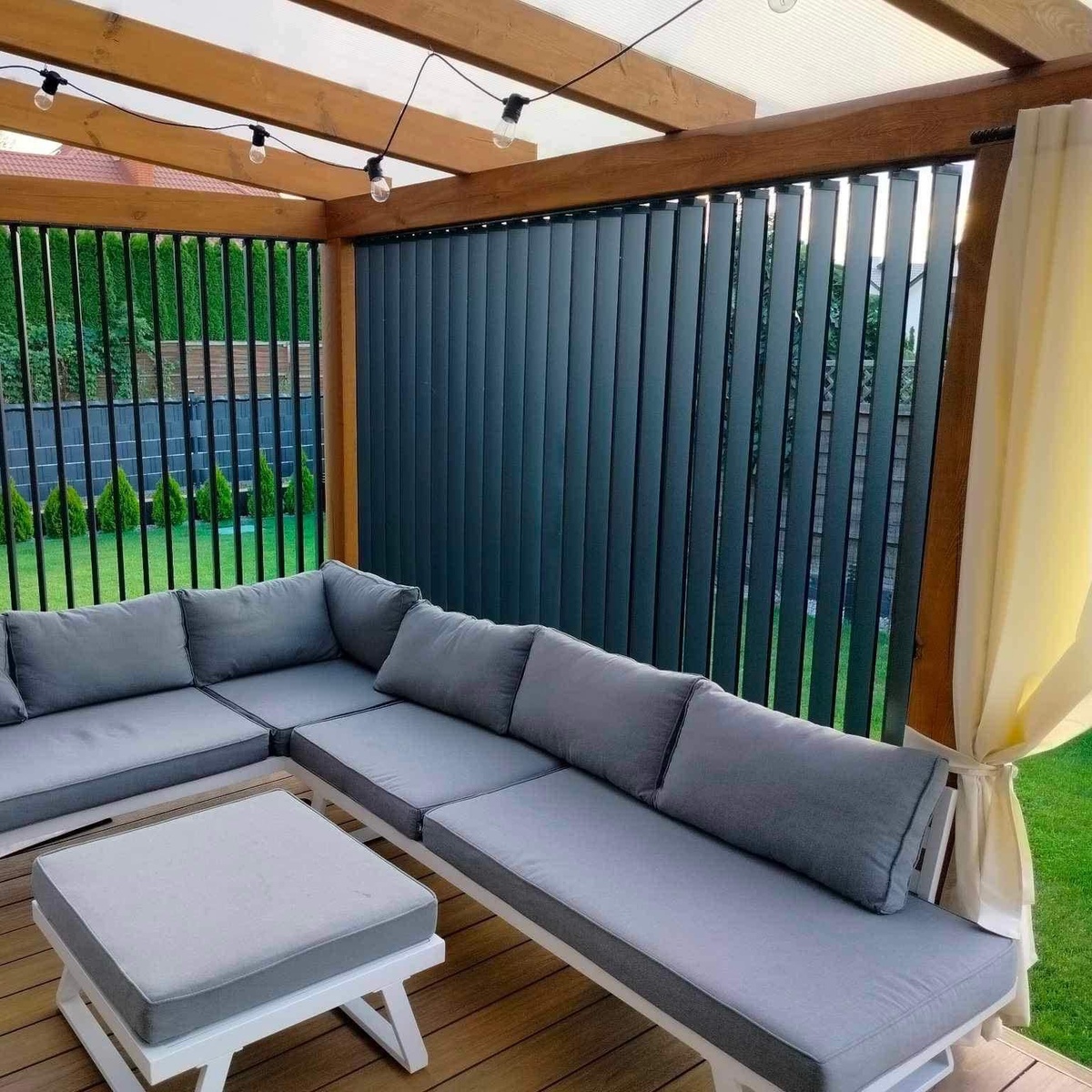
Terrace fence: the homeowner's complete build and buying guide
Every well-planned and properly built terrace is like a living-room extension in the fresh air. But however beautiful your decking may be, there is one element that ties the whole space together, providing both safety and visual appeal — it is the terrace fence.
Many homeowners leave fence planning to the last minute, which often leads to wobbly posts, unsuitable materials or a dull design. In reality, building a terrace fence is one of the most critical stages in creating an outdoor space. Whether you choose traditional wood, modern glass or a clever adjustable louvered system that acts as both a safety barrier and a windbreak and privacy screen?
Why is a terrace fence essential? (Safety and design)
A terrace fence serves two main functions: it saves lives (especially where small children and pets are concerned) and frames your garden aesthetically. Before you reach for the saw, you need to understand both the physical requirements and the design rules.
Safety requirements and building standards in Estonia
As a homeowner you should know that, from a certain height upwards, terrace fence is no longer a matter of taste but a safety element required by law. General building practice and standards in Estonia provide that, where the terrace surface is more than 50 cmabove ground level, a fence is mandatory.
- Handrail height: A safe terrace handrail should have a standard height, measured from the ground (or decking), of 90–100 cm. For balconies and very high terraces, this requirement is often 90–110 cm.
- Gaps in the fencing: If there are children in the household, you need to watch the spacing between vertical or horizontal battens. A safe gap is a maximum of 10 cm, to prevent a child's head from becoming stuck between the rails. You should also avoid the ladder effect (horizontal boards that a child can climb over the fence on) where high, dangerous falls are possible.
Visual boundary and the look of the home
In addition to safety, a fence defines the space. A terrace without a fence can feel bleak and unfinished, blending too much into the lawn. A well-chosen fence creates a clear "room outdoors" feel. If the aim is not only safety but also to create a wind shelter or screen yourself from neighbours' eyes, consider combining or replacing a low fence with a proper terrace wall.
Different materials: How to choose the best terrace fence?
Today's market offers homeowners an endless choice of materials. The right decision depends on the architecture of the house, the budget, and your willingness to maintain the fence.
Wooden terrace fences – Timeless classic
The most common and most affordable option is undoubtedly wooden terrace fences. They are easy to build, the material (impregnated pine or spruce, thermowood, Siberian larch) is readily available, and the design options are limitless (traditional cross-boarding, dense verticals or a stylish diagonal). Pros: Natural, warm, DIY-friendly, easy to repair and repaint. Cons: Wood needs maintenance every couple of years (washing, oiling or painting). If neglected, the fence rots or loses its visual appeal.
Glass railings – Openness and luxury
Glass railings for the terrace are a favourite in modern new-builds. They are used where you do not want to block a wonderful view of nature (for example toward the sea or the forest). Pros: Maximum transparency, protection from the wind, a very exclusive look. No oiling or painting required. Cons: A very expensive solution. Requires constant cleaning, because every fingerprint, raindrop and speck of dust is immediately visible. A closed glass enclosure may create an unpleasant greenhouse effect on the terrace in summer (air does not move).
New and smart – An adjustable louvered screen as a fence
Alongside glass and wood, dynamic systems have become a rising trend. What if your terrace fence was not just a static fence but adapted to the weather? One brilliant solution is to install a luxurious Louvered screen.
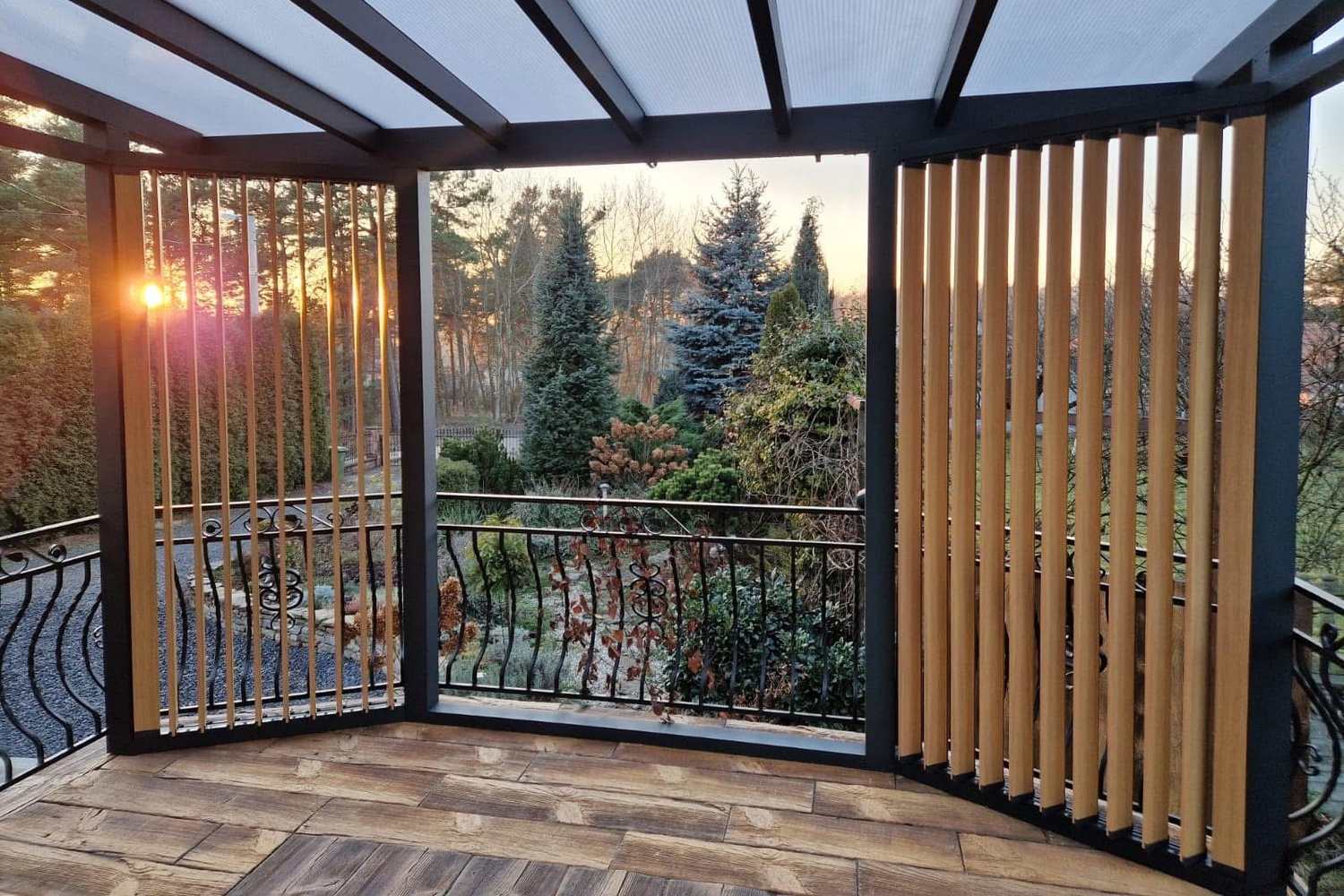
as the fence (or as part of it). In this solution, moving slats are fitted between the fence rails. In windy weather you close the slats fully (creating a wind-tight wall); in hot weather you open them, letting fresh air flow through. You can also set the angle so that it blocks the sun or the neighbours' gaze while not blocking your own view of the garden. This turns a classic fence into a truly interactive design element!
A smart terrace fence: How to create privacy and a windbreak?
While a standard low terrace fence (90 cm) provides fall protection, you often need a corner on the terrace that is higher, to shelter it from draughts and prying eyes.
Integrating a louvered-screen system
Instead of closing off a wall with boards, it is smarter to integrate a dedicated adjustable mechanism into the fence. Smart louvered-screen bracketsare used to build this. These are rails attached to the posts, with pivoting sockets. Installing the brackets is a simple DIY project: you fasten the brackets to the inner sides of your fence posts, fit a control bar, and you have created a living, movable fence.
Aluminium or wooden slat profiles?
For your adjustable terrace fence you can choose from various materials for the fill, using slat profiles that fit the brackets together with suitable slat profiles.
- Wood: Cosy and a perfect match with the rest of a wooden terrace. Bear in mind, however, that wood swells with moisture (leave gaps when installing!).
- Aluminium: Maintenance-free and a lifelong choice! Unlike wood, aluminium never jams or sticks between the brackets. Wood-effect aluminium gives a natural look while being 100% weatherproof and rigid. It is absolutely the best investment for a movable fence!
-
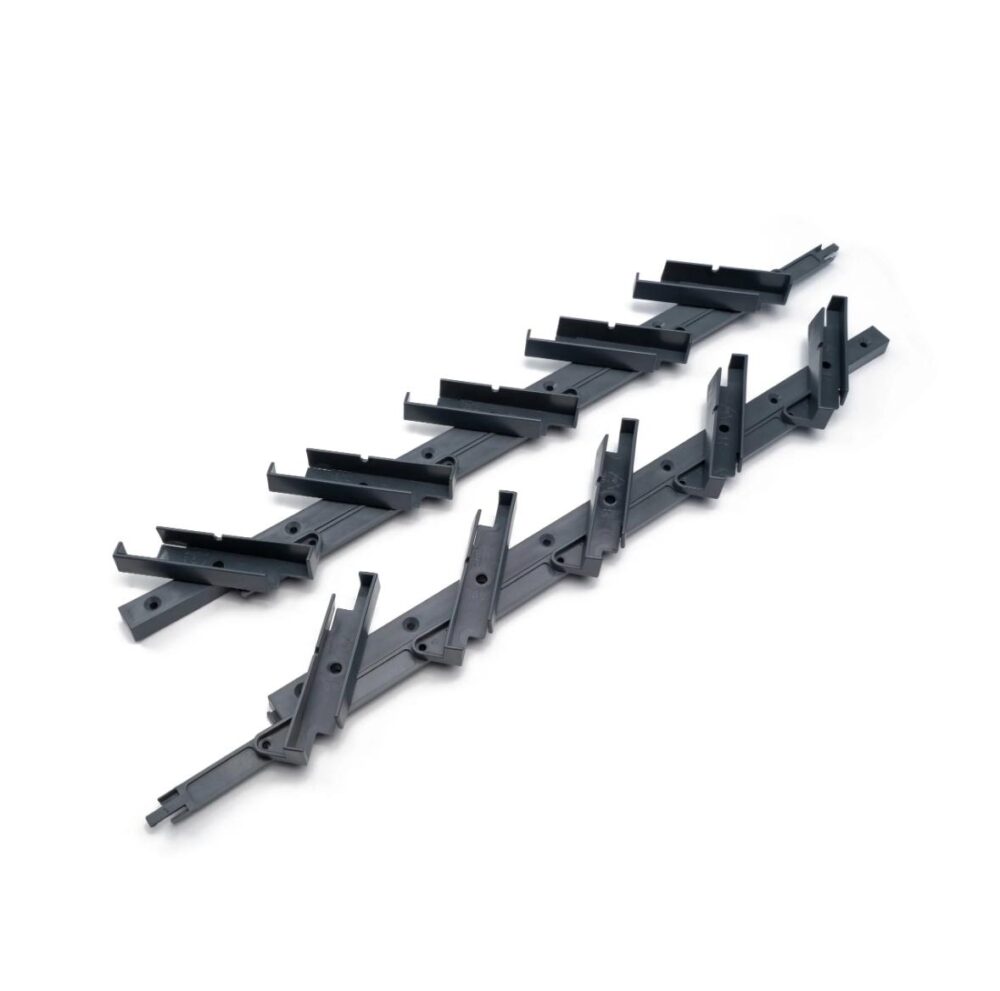
Privaed Flow Core louvered-screen brackets, 500 mm, RAL 7016 anthracite grey composite
28,99 € -
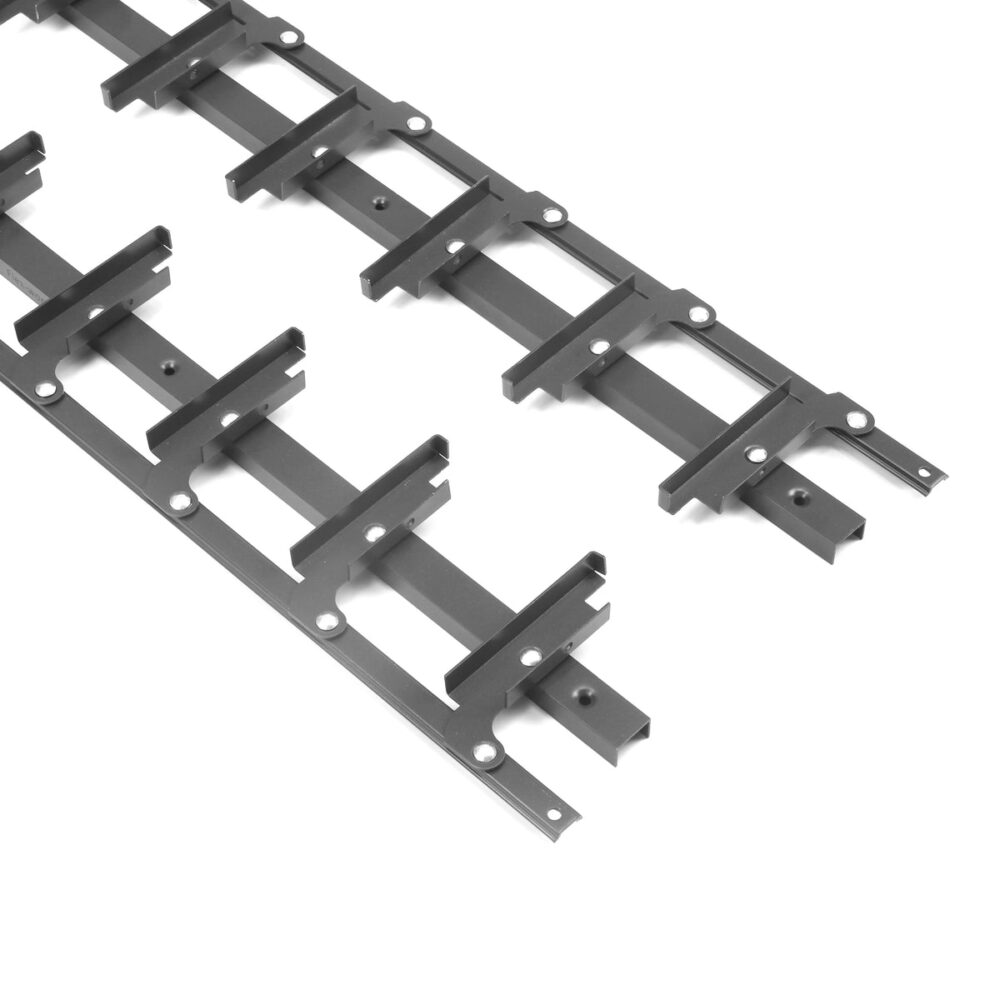
Privaed FLOW louvered-screen brackets, 1070 mm, RAL 7016 anthracite grey aluminium
74,00 € -
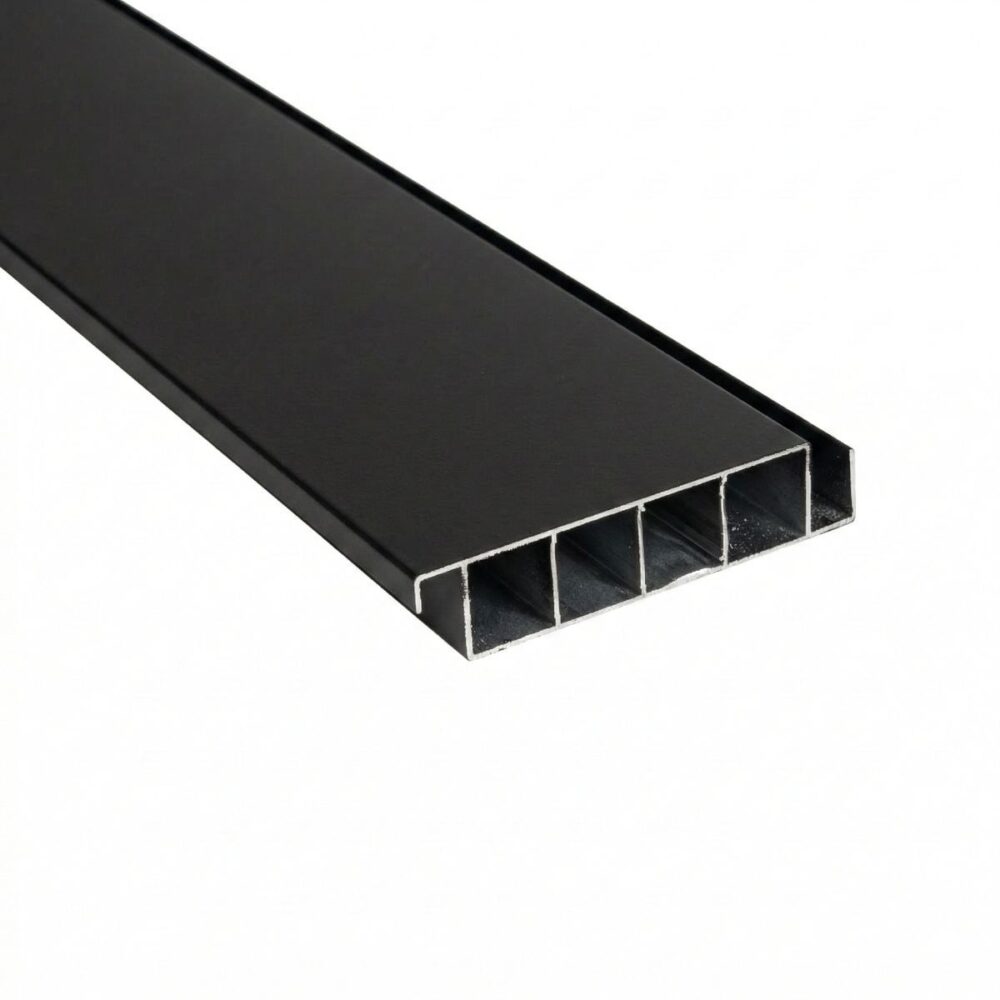
FLOW louvered-screen slat profile, 2400 mm, black aluminium
42,90 € -
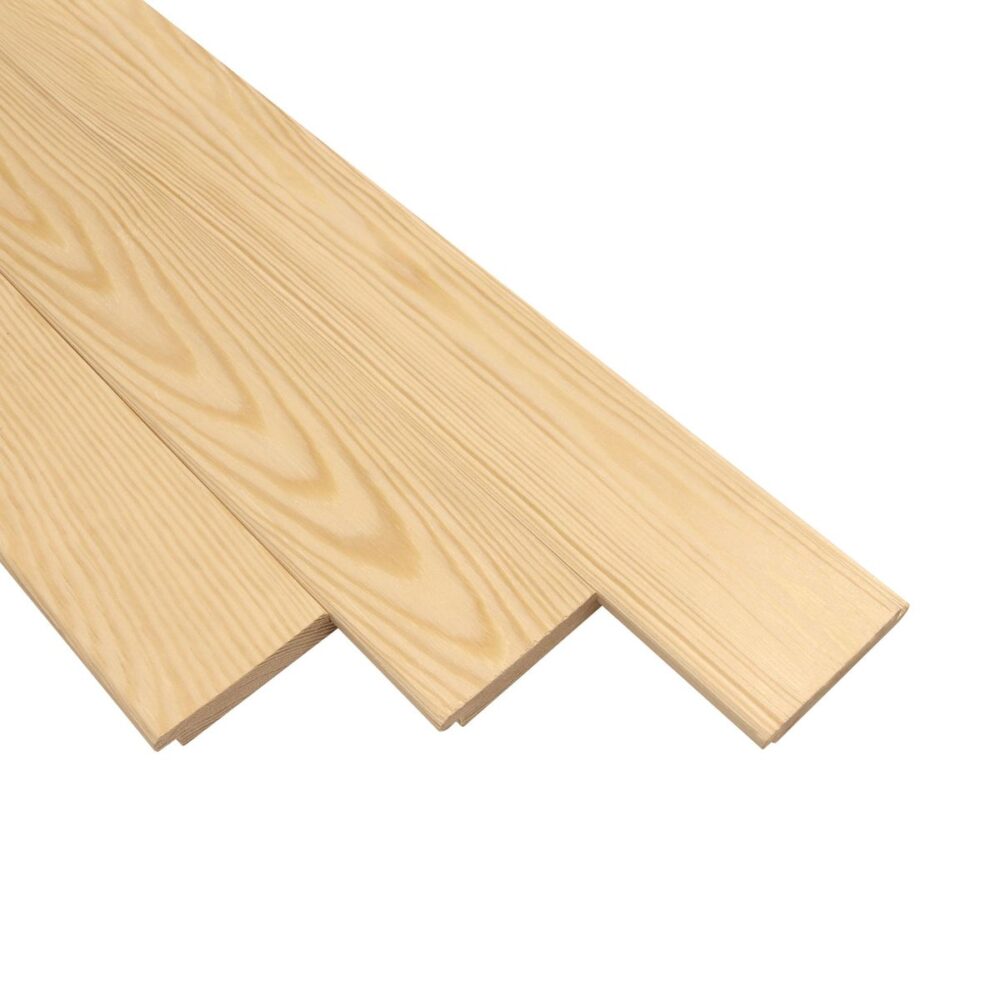
FLOW louvered-screen slat profile, UYS 20×95×1200 mm, natural AB knot-free pine
5,75 € -
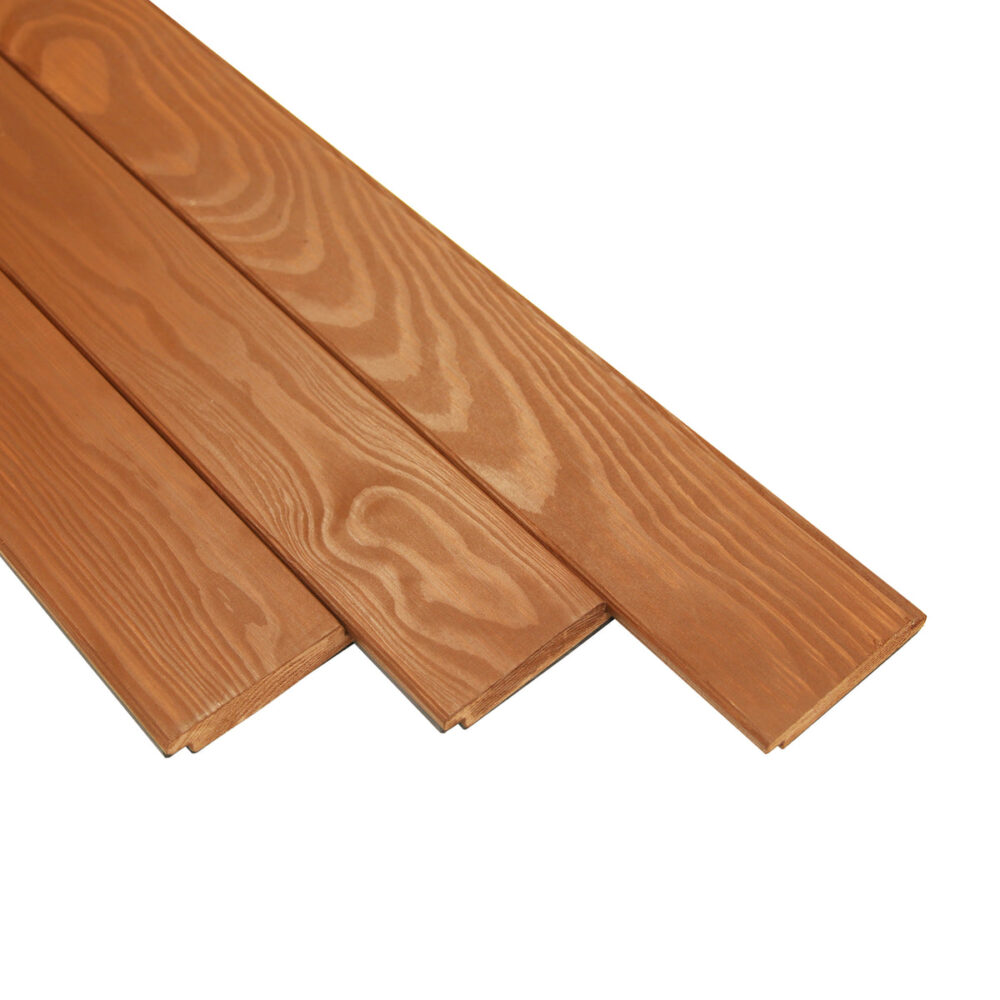
FLOW louvered-screen slat profile, UYS 20×95×1400 mm, thermo-treated pine
8,41 €
Building a terrace fence yourself (DIY guide)
Ready to get hands-on? A terrace fence must be rock-solid. The most common mistake DIYers make is that the fence becomes "wobbly" over time.
Fixing the posts and building the frame
Golden rule: A terrace fence's strength does not come from the handrail or the boarding, but from how the vertical fence posts are fixed!
- Fix to the frame, not to the board: Never screw a fence post (e.g. a 90×90 mm timber) simply onto a floor board. The post must extend through the floor and be fixed with strong through-bolts (not ordinary screws) to the terrace's load-bearing frame (the joists).
- Support brackets: Bolt the post to the frame at at least two points. Where possible, use internal metal angle brackets to prevent the post from "rocking" sideways.
- Spacing: Leave a maximum of 1.2 to 1.5 metres between posts, especially if you are installing heavy glass or louvered-screen brackets.
Fence maintenance and longevity
To make sure your terrace fence is not rotten or faded in 5 years, you need to invest in it after the build is finished, too.
Spring maintenance and oiling of wood
If you built wooden terrace fences, spring maintenance is unavoidable.
- Wash the fence with a special wood-wash brush and a terrace-cleaning product. Do not use a pressure washer that is too strong, which would damage the structure of the wood.
- Let the wood dry completely for a couple of days.
- Apply wood oil or stain with UV protection (pigmented). Pay special attention to the top and bottom ends of the vertical boards, where moisture seeps into the wood most easily!
Maintenance-free solutions: Wash and forget!
If you chose the innovative solution and used as slat profiles for example aluminium, or covered the terrace with glass, your life is significantly easier. Glass railings need only ordinary window cleaner. For adjustable slats (and their plastic brackets) an autumn and spring clean with water is enough. To keep the moving parts smooth, apply a little silicone oil between the brackets once a year.
Quick summaries
- Safety first: If the terrace is more than 50 cm above ground level, a 90–100 cm high terrace fence is mandatory.
- Strength starts from the bottom: Fence posts must always be bolted to the terrace's load-bearing frame (the joists), not to loose floor boards.
- A wider handrail is functional: A wide "drink rail"-style terrace handrail binds the posts rigidly together and provides a comfortable resting surface for drink glasses.
- Dynamic design: A movable Louvered screen offers a huge advantage over glass and rigid wood, giving flexible control over both wind and privacy.
- Prefer a maintenance-free option: If you use adjustable systems, invest in aluminium slat profiles, which do not swell with moisture and never need oiling.
Frequently asked questions (FAQ)
How big should the gaps be between the boards of a terrace fence?
According to building standards (especially with children's safety in mind), the empty space between vertical or horizontal fence components should not exceed 10 centimetres. This rules out a situation where a child could push its head or body through the fence and be endangered.
Why is my terrace fence wobbling and how do I fix it?
The cause of looseness and wobble is almost always weakly fixed vertical support posts. If the posts are simply screwed onto the top floor boards, they will soon give way. To fix it, the floor boards must be removed and the posts bolted with strong bolts directly to the terrace's frame (joists).
Can I use louvered-screen brackets in a low fence?
Yes, absolutely! Louvered-screen brackets can be cut to the required size (for example 90 cm) and fixed between fence posts. This creates a standard-height fence whose boards you can open and close according to the direction of the wind.
How do I build a terrace fence that provides a windbreak while still letting the light through?
The best solution for this is not a dense wooden wall (which blocks the light), nor closed glass (which can create a greenhouse effect in summer and needs washing). The best compromise is a louvered system with adjustable opening. If you install aluminium slats in a light shade or with a wood effect, you can break the wind by angling them, while still reflecting plenty of light onto the terrace.